 |
| Isaac Albeniz 1860 -1909 Isaac Albeniz was a child prodigy having been taught to play the piano by his sister at age of one year! If we are to believe the stories he ran away and travelled extensively in South and North America from Buenes Aries to Uruguay and as far as San Francisco. He was a gifted pianist and composer and his most famous legacy is probably the Iberia Suite, which musically describes many provinces of Spain, from which the beatiful 'Granada' comes. Listen to it here. Much of Albeniz's work has been very successfully transcribed for the guitar. If you want to hear the guitar version it's here. Finally, one piece of music that I listen to over and again through the years is his 'Tango in D' opus 165, from the Espanola Suite. It, too, works well for the guitar. Look at that fabulous photograph - don't try to tell me that Albeniz was not a romantic! Incidentally there are much better recordings available but they're not on YouTube. |
Wednesday, 28 July 2010
My Heroes (28): Isaac Abeniz


Saturday, 24 July 2010
Untitled poem by Paul Smith
I enjoy the tanka and haiku poetry of Paul Smith at Paper Moon. This form of verse is deceptive; it looks easy to write but is, in fact, very difficult. There is great skill in capturing a moment with a limited number of words:
 |
| fineartamerica.com as if it was the only flower that ever bloomed she stoops to touch a daisy If you enjoy this there is a lot more at Paper Moon. You might also enjoy the photographs and words of Joanne Rose. |
Thursday, 22 July 2010
Bruay-La Buisierre, France
I spent last weekend at the home of friend who has owned a house in the north of France for around seven years. Nine of us have just spent several days there staying in the little house in Bruay. We had a non-stop three day barbecue and drank the town dry of champagne.
It's in the so-called 'poorer' part of France; the far North. The countryside is beautiful and the people are charming and very friendly, unlike Paris!
It's in the so-called 'poorer' part of France; the far North. The countryside is beautiful and the people are charming and very friendly, unlike Paris!
 |
 ABOVE: The Hotel de Ville (Town Hall/City Hall) |
Wednesday, 14 July 2010
The Road Not Taken by Robert Frost
 |
| Robert Frost in 1910 (www.wikitree.com) |
The Road Not Taken
Two roads diverged in a yellow wood,
And sorry I could not travel both
And be one traveler, long I stood
And looked down one as far as I could
To where it bent in the undergrowth;
Then took the other, as just as fair,
And having perhaps the better claim,
Because it was grassy and wanted wear;
Though as for that the passing there
Had worn them really about the same,
And both that morning equally lay
In leaves no step had trodden black.
Oh, I kept the first for another day!
Yet knowing how way leads on to way,
I doubted if I should ever come back.
I shall be telling this with a sigh
Somewhere ages and ages hence:
Two roads diverged in a wood, and I-
I took the one less traveled by,
And that has made all the difference.
Although seemingly a simple poem this is often described as one of the most misunderstood poems of all time. Frost himself described it as "tricky, very tricky".
This is because is can be read in at least two very different ways. When the poet decides to take the path that was 'grassy and wanting wear', he imediately contradicts himself and then tells us that they had both worn 'about the same'!
It will usually be seen as a metaphor about life's choices and everlasting regret or nostalgia for what the other path might have led to.
The final stanza, when read carefully, is a supposition about the future, 'I shall be telling this with a sigh somewhere ages and ages hence'. The 'sigh' could be seen as either nostalgia or regret but it hasn't happened yet!
In fact Frost wrote with his indecisive friend Edward Thomas, his British walking companion, in mind. Apparently Thomas never recognised himself in the poem.
I have always presumed that M. Scott Peck's multi-million selling self-help book, 'The Road Less Traveled' took it's title from this verse.
Tuesday, 6 July 2010
Painting of the month (7) July 2010: John Constable
 |
| Flarford Mill. John Constable 1816-7 |
John Constable can be 'difficult' because, although he is now acknowledged as one of the all time great landscape painters, he is sometimes described as 'too chocolate boxy'. I think he was a great painter. Look at the way he achieves depth and distance in the middle distance on the right of the picture.
With a small amount of space he has managed, by the use of sunlight on the grass and careful scaling, to give a real feeling of distance from those trees to the foreground.
He was always extremely jealous of his contemporary, JMW Turner, who, if you read this blog regularly, you will know I rate as a real genius.
But let's not get distracted John Constable is well-worthy of recognition. There was a time when landscape painting was seen as the lowest grade of art. Religious art and history painting were the highest regarded styles. If you consider a painting like Leonardo's Mona Lisa, the landscape, although finely painted, is very much background. Constable and Turner helped turn that attitude around.
Friday, 2 July 2010
Quiz Question (7) : Richard Condon

1) The late American author, Richard Condon (The Manchurian Candidate, Winter Kills, Prizzi's Honor etc.) had a different character in every one of his novels with the same name. although it was a different person. Usually that character would be a minor figure or part of the sub-plot but not necessarily. What was that person's name?
2) In the front of most Richard Condon novels there is a quotation or epigraph from The Keener's Manual, from which the title of the book was often taken. eg;
Minutes trudge,Hours run,
Years fly,Decades stun.
Spring seduces,
Summer thrills,Autumn sates,
Winter kills.What is The Keener's Manual?
(Winter Kills 1974)
The answers are now posted in the comments!
Sunday, 27 June 2010
My Heroes (27) : Vincent van Gogh
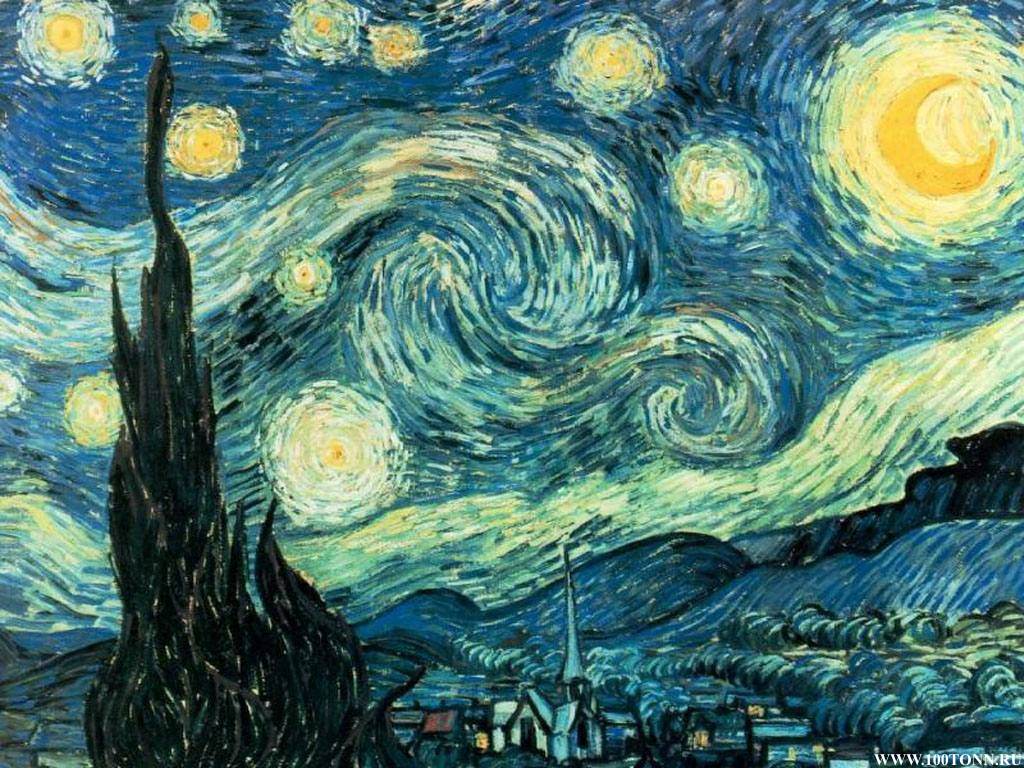 |
| "And he dreamed yet another dream, and told it his brethren, and said, Behold, I have dreamed a dream more; and, behold, the sun and the moon and the eleven stars made obeisance to me." Genesis 39:7
It is known that Vincent van Gogh was deeply religious but it is not known for certain if the eleven stars in this iconic painting are a merely a coincidence. The artist, who only ever sold one picture in his lifetime, was true to his beliefs his whole life through. No artist has ever displayed the passion that he was able to do on canvas.
"They did not listen, they're not listening now. Perhaps they don't know how." |
Tuesday, 22 June 2010
Carvoeiro on the Portguese Algarve (Part Two)
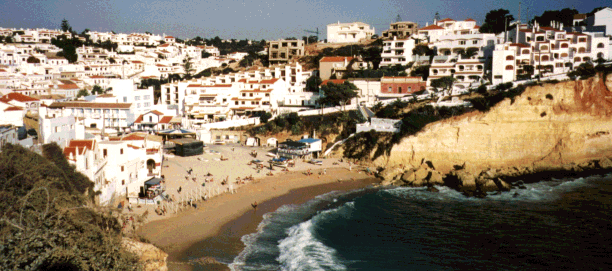
The weather in Portrugal was not as brilliant as usu
al for the first few days but I didn't mind - I'm not a sun-worshiper. I was quite happy to spend my time painting (It was the first time I had remembered to take painting equipment with me).
While the others were muttering and cursing and shaking their fists at the sky I was happily reading or drawing. The villa where we always stay is on a cliff top over the small former fishing village of Carvoeiro. Today the Algarve (Portugal's southernmost province) is largely about golf; that's not something I can get interested in but lots of my friends go there to play. I find it to be more unspolit than Spain and a bit more friendly. Because of the Euro-Stirling exchange rate, prices seemed expensive for us but I don't usually worry too much about those things when on vacation; I just bite the bullet and pay the price. That's my philosophy at all times anyway because there is no point in spending ones life complaining and moaning; better to simply enjoy life.
This was a hedonistic holiday mostly centered on eating, drinking, talking, walking, lazing in the heated pool, reading and, for me, painting. I'm not very good but it's a hugely enjoyable pastime.
My first book was 'Pictures at an Exhibition' by DM Thomas. It was a very 'difficult' read and ultimately unsatisfying. It deals with the same subject as his earlier masterpiece, 'The White Hotel', that is - the holocaust, Freuidian pyschoanalysis and human sexuality. Much more enjoyable is a book I am still reading. 'Ordinary Thunderstorms' by William Boyd opens like an good but standard type of man-on-the run thriller buts seems to be developing deeper more meaningfuul themes.
 |
| Ferragudo with Portimao across the estuary in the distance. Picture from http://www.algarvetraveldirect.co.uk/ |
The area has been settled for more than two thousand years, having been variously occupied or settled by the Phoenicians, Romans and the Moors.
Monday, 7 June 2010
Carvoeiro on the Portguese Algarve (Part One)

I'm off again! This time with some friends to Carvoeiro (pronounced: carv-where-oh) in the Algarve which is the southernmost province of Portugal. In fact it's near the extreme south-west corner of mainline Europe.
We have stayed many times in the same large private villa. I'll spend most of the time by the pool, in the shade, with a pile of good books from the Villa's own library (we add some volumes every time we go).
I suppose I'll be sipping a drink or two while I read and dipping a toe in the heated pool. Back in a couple of weeks!
Tuesday, 1 June 2010
Painting(s) of the Month (6) June 2010: Bridget Riley

This month I am showing several of British artist Bridget Riley's optical paintings and not saying too much about them. They are for pure visual enjoyment.
For me, the interesting point about her work is, although abstract, they do convey a lot via one's emotional and physical responses. She has said that the journey that the eye makes over her paintings is similar to that of a natural scene. The optical effects convey a strong vibrancy via their constuction or colour.
Look how the picture above appears to shimmer! It seems to be on the move constantly and the last one begins to dance if you run your eyes over it. (Or is the Belgian beer still running around my brain?)




Saturday, 29 May 2010
Bruges, Belgium (Part Two)
 |
| View of a Bruges canal |
There are some bars that carry hundreds of beers and they always serve each one in it's own special glass.
 |
 The local brew produced at the Halve Maan (Half Moon) brewery is a 6% fruity, spiced blonde beer of character called Bruges Zot. You can see it being made during hourly tours of the brewery although they only brew about two weeks of every month.  Trappist monks have been brewing for hundreds of years as a part of their need to be self-sufficient. In times of cholera they could survive on beer because of its nutritious qualities when water was too dangerous to drink. Nowaday a genuine 'Trappist' beer is made in one of the seven trappist abbeys. 'Abbey' beer is made in the trappist style. Two great beer-cafes in Bruges are De Garre and Herberg Vlissinghe, which claims to be the oldest continually run pub in the world. Cheers! |
 |
| A beer bar since 1515! |
Monday, 24 May 2010
Bruges, Belgium (Part One)
.jpg)

Saturday, 22 May 2010
'Don’t Take A Fence' by Paul Curtis.
Don’t Take A Fence
My uncle John the fence died
When I heard I felt quite sorry
It was poetic justice though
As he fell off the back of a lorry
Copyright © Paul Curtis. All Rights Reserved
This lovely little poem needs some explaining for non-English readers. In Wales 'John the fence' would be a man who erected fences; in England and elsewhere it would be a man who received stolen goods.
And in British English (I'm not sure about elsewhere - please let me know), something that 'fell off the back of lorry' means it was stolen so I can sell it to you cheaply!
My uncle John the fence died
When I heard I felt quite sorry
It was poetic justice though
As he fell off the back of a lorry
Copyright © Paul Curtis. All Rights Reserved
This lovely little poem needs some explaining for non-English readers. In Wales 'John the fence' would be a man who erected fences; in England and elsewhere it would be a man who received stolen goods.
And in British English (I'm not sure about elsewhere - please let me know), something that 'fell off the back of lorry' means it was stolen so I can sell it to you cheaply!
Tuesday, 18 May 2010
Quiz Question (6): First Sentence of Books

Can you identify these four famous first sentences? I will put the answers in the comments in a few days. The photo above is no help at all!
Q1 "It was a bright cold day in April, and the clocks were striking thirteen."
Q2 “James Bond, with two double bourbons inside him, sat in the final departure lounge of Miami Airport and thought about life and death.”
Q3 "Mr. and Mrs. Dursley, of number four, Privet Drive, were proud to say that they were perfectly normal, thank you very much."
Q4 "Far out in the uncharted backwaters of the unfashionable end of the Western Spiral arm of the Galaxy lies a small unregarded yellow sun."
The answers are now given in the comments.
Check it out and see if you were right!
Friday, 14 May 2010
The Darwin Awards

You may have never heard about the Darwin Awards. They are not about Charles Darwin but there is a genetics connection.
They are given posthumously to people who have removed themselves from the gene-pool of humanity by stupidly killing themselves before they have had a chance to reproduce, thus improving the total quality of human genes.
Morbid, you may feel, but try not laughing at this story of the man who wanted to fish in a frozen lake.
He went to the lake with his his fishing tackle, his dog and a stick of dynamite. He lit the fuse and tossed the dynamite out onto the ice.
The dog was a retriever.
He faithfully brought the dynamite back and lay it at his master's feet. Goodbye suspect genes!
How about the guy who tied several bungee cords together and, after making sure their length was shorter by several feet than the drop from an overhead gantry tied one end around his ankle and jumped.
We will never know if he realised, before he smashed into the pavement below a few seconds later, that he had measured the unstreched length.

For more about the annual Darwin Awards click here .
Monday, 10 May 2010
My Heroes (26): Richard Buckminster Fuller
 |
| Richard Buckminster Fuller, 1895 -1983 |
Most people have heard of Buckminster Fuller bur the majority are not quite sure why his name is known. I hope to redress that situation here, if only to a dozen or so readers!
He was not only renowned architect, inventor, engineer, mathematician, poet and cosmologist but had other idealistic qualities.
At the age of 32 he was bankrupt, depressed and contemplating suicide after the tragic death of his four year-old daughter Alexandria. Thankfully he had a vision of some kind and decided to dedicate the rest of his life to helping humanity. He was one of the first people to postulate the notion that, with political will, world poverty could be eliminated within one generation.
Later generations of scientists have confirmed that his theories stands up. Sadly, the 'political will' has been absent. He was never a mainstream figure and is seen by some as a visionary and by others as a dreamer. His inventions were meant to help achieve his goals of improving human housing and everyday objects.
His is mostly remembered for his invention of the Geodesic Dome which is built out of a series of triangles and requires no internal support. The domes could be packed flat and easily transported and assembled.
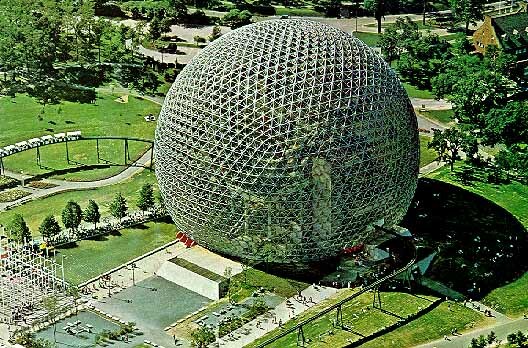
Knowing that you all have short attention-spans, I don't like to post articles that are too long so here are some brief facts about 'Bucky':
He held more than 2,000 patents.
He wrote 28 books.
He recieved 47 honourary degrees.
He coined the term 'Spaceship Earth'.
He was a teacher, poet, philosopher, archtect, mathematician, engineer, inventor and product designer.
He dedicated his life to the betterment of mankind.
The molecule Buckminsterfullerene, not surprisingly, was named after him.

C60 or Buckminsterfullerene is a molecule of 60 carbons atoms.
If you compare the structure of the molecule with the photo of a Geodesic dome you can see why it was so named.
Friday, 7 May 2010
Painting of the Month (5) May 2010: St Francis by Giotto di Bondone
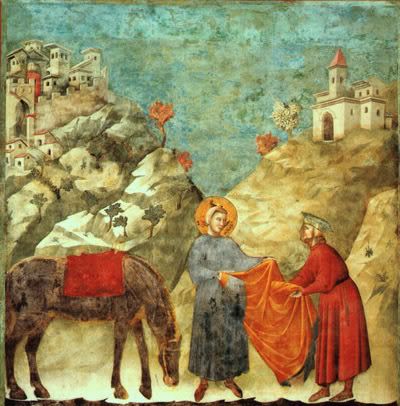
By Giotto di Bondone (c. 1267 - 1337)
Giotto has a special place in the pantheon of the history of painting. Although he displayed no real knowledge of perspective like, say, Ucello (born 1397), or a knowledge of human anatomy such as that displayed by Michaelangelo (born 1475) he is generally credited with being the first to breakaway from the dominant style of Byzantine art which displayed very little realism and appeared very flat with hardly any shading.


So, although his work appears to be very 'ancient' to our eyes, it should be viewed in the context of his being sometimes known as 'the first painter'. This was a move in the direction of realism.
Incidentally you might note the lack of blue pigment in this painting.
All the ultramarine used in Europe was imported from the mines at Badakshan, in what is now Afghanistan. Extracted from the semi-precious stone lapis lazuli, it was an extremely lightfast, bright deep blue. The extraction process was complicated and labour-intensive, which added to its cost (more than gold at the time). The pigment was imported via Venice, so it was used by a lot of Italian artists, who had relatively easy access to it.
Giotto probably didn't even have the option of using it.
In later rennaisance religious art you can see that the robes of the virgin were depicted in 'heavenly' blue, which would have been read as a sign of both opulence and reverence.
Incidentally you might note the lack of blue pigment in this painting.
All the ultramarine used in Europe was imported from the mines at Badakshan, in what is now Afghanistan. Extracted from the semi-precious stone lapis lazuli, it was an extremely lightfast, bright deep blue. The extraction process was complicated and labour-intensive, which added to its cost (more than gold at the time). The pigment was imported via Venice, so it was used by a lot of Italian artists, who had relatively easy access to it.
Giotto probably didn't even have the option of using it.
In later rennaisance religious art you can see that the robes of the virgin were depicted in 'heavenly' blue, which would have been read as a sign of both opulence and reverence.
Sunday, 2 May 2010
My Last Duchess by Robert Browning
Even if poetry is not your 'thing' please take some time out to read this poem and my analysis of the shocking meaning at the end.
 |
| Lucrezia de’ Medici, thought to be the Duchess in this poem. |

My Last Duchess by Robert Browning
FerraraThat’s my last Duchess painted on the wall,
Looking as if she were alive. I call
That piece a wonder, now: Fra Pandolf’s hands
Worked busily a day, and there she stands.
Will’t please you sit and look at her? I said
“Fra Pandolf” by design, for never read
Strangers like you that pictured countenance,
The depth and passion of its earnest glance,
But to myself they turned (since none puts by
The curtain I have drawn for you, but I)
And seemed as they would ask me, if they durst,
How such a glance came there; so, not the first
Are you to turn and ask thus. Sir, ’twas not
Her husband’s presence only, called that spot
Of joy into the Duchess’ cheek: perhaps
Fra Pandolf chanced to say “Her mantle laps
Over my lady’s wrist too much,” or “Paint
Must never hope to reproduce the faint
Half-flush that dies along her throat”: such stuff
Was courtesy, she thought, and cause enough
For calling up that spot of joy. She had
A heart—how shall I say?—too soon made glad,
Too easily impressed; she liked whate’er
She looked on, and her looks went everywhere.
Sir, ’twas all one! My favour at her breast,
The dropping of the daylight in the West,
The bough of cherries some officious fool
Broke in the orchard for her, the white mule
She rode with round the terrace—all and each
Would draw from her alike the approving speech,
Or blush, at least. She thanked men,—good! but thanked
Somehow—I know not how—as if she ranked
My gift of a nine-hundred-years-old name
With anybody’s gift. Who’d stoop to blame
This sort of trifling? Even had you skill
In speech—(which I have not)—to make your will
Quite clear to such an one, and say, “Just this
Or that in you disgusts me; here you miss,
Or there exceed the mark”—and if she let
Herself be lessoned so, nor plainly set
Her wits to yours, forsooth, and made excuse,
—E’en then would be some stooping; and I choose
Never to stoop. Oh sir, she smiled, no doubt,
Whene’er I passed her; but who passed without
Much the same smile? This grew; I gave commands;
Then all smiles stopped together. There she stands
As if alive. Will’t please you rise? We’ll meet
The company below, then. I repeat,
The Count your master’s known munificence
Is ample warrant that no just pretence
Of mine for dowry will be disallowed;
Though his fair daughter’s self, as I avowed
At starting, is my object. Nay, we’ll go
Together down, sir. Notice Neptune, though,
Taming a sea-horse, thought a rarity,
Which Claus of Innsbruck cast in bronze for me!
 |
| Robert Browning 1812 - 1889 |
He describes her as if one of his many possessions and tells how she rated the friendship and attention of others above the gift of his "nine hundred years old name".
When I first read this poem my blood ran cold and I was genuinely shocked when I realised what the Duke was implying:
"......I gave commands;
Then all smiles stopped together.
There she stands as if alive".
He's had her killed! Oh my God! He talks about her as if she were faulty goods that had he had to be rid of. Please read the poem again with this knowledge and notice how cleverly Browning has shown the casual nonchalance of the Duke.
At the end he is preparing to go downstairs to size up his next potential wife while talking about some of his other posessions. Chilling, the work of a master poet.
Friday, 30 April 2010
The Story of Boris
 |
| Boris, left, with his brother. |
Uncle Ben was interested in Russian literature and was reading a volume of poetry by Boris Pasternak, author of Doctor Zhivago. My grandfather came from Russia in 1906 in the wave of Jewish emmigration from that place at that time and, although he spoke good enough English, he never learned to read or write it. He saw the book had a photograph of the author on the back.
"That's my cousin Boris!" he said. "No, Dad, that's Boris Pasternak" said Uncle Ben, smiling indulgently.
Grandad (known to our large family as 'Pop') insisted it was his cousin so Uncle Ben set about researching it. Pasternak's father was an artist of renown and his mother a famous concert pianist. While he was growing up Tolstoy, Scriabin, Rachmaninov and Rilke were regular visitors to the house.
His father converted to Christianity and Boris went off to University and Pop never saw him again but he was proved to be right; all of the facts he gave Uncle Ben were verified and it turns out that Bazza's grandfather was Boris Pasternak's first cousin.
I think it means that I share about 1.5% of my genes with a Nobel Prize winner. Explains a lot don't you think?
Saturday, 24 April 2010
What is the Dunmow Flitch?
 |
| The Dunmow Flitch |
It is awarded to a couple who "in twelvemonth and a day have not wisht themselves unmarried again"!
There are many stories about the true origins but it was mentioned by Chaucer in The Canterbury Tales (The Wife of Bath's Tale).
 |
| An American couple whio won in 2004 |
The first recorded recipient was Richard Wright in 1445 (strangely, her name is not recorded). There is evidence that there could have been 12th century awards.
The award was discontinued and reinstated several times but has been fairly constant during this century.
After WW2 a side of bacon was sent by New Zealand, presumably because it was in short supply here.
Formerly chosen by the Lord of the Manor, these days the couple are chosen by a jury.
There was a heated debate in 2006 when it was proposed that gays be considered for the award.
 |
| A jury of 6 maidens and 6 batchelors! |
A member of the organising committee has said "We have not yet had a Jewish, Muslim or Sikh couple apply, but we are such a diverse society that there is no reason why that day should not come."
Really? I'm not sure about Sikhs, but what would Jews or Muslims do with a side of bacon?
Saturday, 17 April 2010
My Heroes (25): Walter Matthau

 The Fortune Cookie. Directed by the wonderful Billy Wilder, one of Matthau's dozen or so collaborations with Jack Lemmon. He played a shyster lawyer who attempts to gain exhorbitant damages for his reluctant brother-in-law, played by Lemmon, who gets 'injured' while working as a TV cameraman at a football game.
 Charley Varrick. This time he is a crop-duster who robs a small town bank that just happens to be where the mafia keep lots of their cash. The twists and turns of plot as they try to get their cash back from a wiley Varrick (Matthau) is hugely entertaining.
 The Sunshine Boys. This time Walter is paired with George Burns. They portray a pair of former vaudeville comedians who once had a famous double-act although they have not spoken to each other for many years. Matthau's nephew (Richard Benjamin) is trying to re-unite the pair for a TV special. Great stuff, scripted by Neil Simon. "Enter!" (You had to be there.)
 The Odd Couple. Felix is a neurotic divorcee who moves in with his slob of a friend Oscar, (Matthau.... of course), after the breakdown of his marriage. The comedy ensues from the interplay of the two chalk-and-cheese personalities. The writer Neil Simon claims that he based his original Broadway play on stories told to him by Mel Brooks after his own divorce. Thirty years later they made a sequel excitingly called The Odd Couple 2.
Other superb Matthau performances were given in Hello Dolly, Little Miss Marker, The Bad News Bears, The Front Page, Plaza Suite and many others.
For me, he could hardly do any wrong and I feel good just talking about these films.
Thursday, 15 April 2010
'Daddy' by Sylvia Plath

Sylvia Plath 1932 - 1963
Prologue: This is the hardest blog post I have ever done and I have had it in preparation for a long time and I have been putting off publication until the time felt right. The circumstances of this poem are so desperately sad that it may move you to tears; but how do we know we are alive unless we let a little pain into our hearts?Read the poem now and I will tell about the heart-rending background at the end of this post.
Have the kleenex ready!
You do not do, you do not do
Any more, black shoe
In which I have lived like a foot
For thirty years, poor and white,
Barely daring to breathe or Achoo.
Daddy, I have had to kill you.
You died before I had time ----
Marble-heavy, a bag full of God,
Ghastly statue with one gray toe
Big as a Frisco seal
And a head in the freakish Atlantic
Where it pours bean green over blue
In the waters off the beautiful Nauset
I used to pray to recover you.
Ach, du.
In the German tongue, in the Polish town
Scraped flat by the roller
Of wars, wars, wars.
But the name of the town is common.
My Polack friend
Says there are a dozen or two.
So I never could tell where you
Put your foot, your root,
I never could talk to you.
The tongue stuck in my jaw.
It stuck in a barb wire snare.
Ich, ich, ich, ich,
I could hardly speak.
I thought every German was you.
And the language obscene
An engine, an engine,
Chuffing me off like a Jew.
A Jew to Dachau, Auschwitz, Belsen.
I began to talk like a Jew.
I think I may well be a Jew.
The snows of the Tyrol, the clear beer of Vienna
Are not very pure or true.
With my gypsy ancestress and my weird luck
And my Taroc pack and my Taroc pack
I may be a bit of a Jew.
I have always been scared of you,
With your Luftwaffe, your gobbledygoo.
And your neat mustache
And your Aryan eye, bright blue.
Panzer-man, panzer-man, O You ----
Not God but a swastika
So black no sky could squeak through.
Every woman adores a Fascist,
The boot in the face, the brute
Brute heart of a brute like you.
You stand at the blackboard, daddy,
In the picture I have of you,
A cleft in your chin instead of your foot
But no less a devil for that, no not
Any less the black man who
Bit my pretty red heart in two.
I was ten when they buried you.
At twenty I tried to die
And get back, back, back to you.
I thought even the bones would do.
But they pulled me out of the sack,
And they stuck me together with glue.
And then I knew what to do.
I made a model of you,
A man in black with a Meinkampf look
And a love of the rack and the screw.
And I said I do, I do
So daddy, I'm finally through.
The black telephone's off at the root,
The voices just can't worm through.
If I've killed one man, I've killed two ----
The vampire who said he was you
And drank my blood for a year,
Seven years, if you want to know.
Daddy, you can lie back now.
There's a stake in your fat black heart
And the villagers never liked you.
They are dancing and stamping on you.
They always knew it was you.
Daddy, daddy, you bastard, I'm through.
-Sylvia Plath. Written October 12 1962.

The imagery in this poem is mightily powerful and can be read in a variety of ways. The language is visceral and pulls no punches. It can be seen as analogy; her relationship with her father likened to Nazis and Jews; the metaphor of feet and shoes and 'fitting' suggesting body parts and the holocaust. Likewise, the references to vampires and blood.
And, even though the poem grips you with it's stark imagery all the way through, still the last line delivers a hard-hitting punch. She has finally detached herself from the obsession of her life but the price she had to pay was terrible.
The year after writing this poem she sealed her children's bedroom door with wet towels, stuck her head in the gas oven and killed herself. The ultimate irony was to find her own 'final solution'.
If this leaves you feeling low here is a link to something lighter that she wrote after the birth of her first child: 'Morning Song'....(Love set you going like a fat gold watch.)
Actually, there's even a touch of melancholy about that poem too!
Sunday, 11 April 2010
Beautiful Blogger Award

Now it's my turn to recommend some of my favourite blogs. I don't always leave comments and even if I do some of them have never been here!
Here are my Award-Winners, in no particular order, except that at number one it has to be: The Queen of Bloggingham Palace at Mimi Writes.... and Dating Profile of the Day and she has other blog's too! She is clearlyobsesseddedicated to her art!
I always enjoys the sketches of animator MattJones.
And also the multiple contributors to Urban Sketchers.
In a similar 'arty 'vein there is Jesse Mangerson.
For some serious mind-extending, infrequently posted reading try the outrageously under-visited An Evolution of Knowledge by Stephen in Australia.
I should also mention the interesting writing of David at A Day in the Life although he already has this award!
Alicia at Forever Changed was one of the first posters on my original blog and, thankfully, still writes an interesting and varied blog diarising her journey since a traumatic life-changing experience.
Another Alicia in Vancouver displays some of her beautiful artwork at The Terra Studios
New kid on the block Tom Eagerly, who currently only posts witty comments and seems to be shadowing me, should get his own blog!
And finally a very special recommendation for my long-time blogging compadre Bob at Tolkien's Tree located in Oxford, UK. He is thought-provoking, funny, serious, observant, mercifully brief, insightful and it's always a pleasant surprise to read each new post. Please visit his (and all the other!) blogs listed here
I should say that there are many other blogs that I regularly visit and enjoy and I apologise to anyone who should have been here but got omitted somehow.
Friday, 9 April 2010
Quiz Question (5): Literary Inn-keepers

No more Mr Nice Guy; last time the questions were too easy, (or you were too clever!)
Can you name where these two famous fictional inn-keepers can be found and say who created them?
- Harry Bailey
- Maurice Allington

The usual rules apply:
- No prizes, just the kudos
- Two complete correct answers required
- No Googling
- This time the pictures won't help!
Answers are now posted in the comments!
Monday, 5 April 2010
Twenty Heroes (From My Previous Blog)

Something I enjoyed doing in my previous blog (before I took a three year break) was the My Heroes series.
Here are links to the first twenty of them, just click to go straight to the original post. If you feel inclined to comment, please comment in this post, but don't forget to tell me who you are talking about! Thanks:1) Andres Segovia
2) Paul Cezanne
3) Bobby Moore
4) Albert Einstein
5) Sigmund Freud
6) Charles Darwin
7) Aung San Suu Kyi
8) Michael Johnson
9) Michel de Montaigne
10) Sir Winston Churchill
11) Homer Simpson
12) Antoni Gaudi
13) Andrew Marvell
14) Fiona Pitt-Kethley
15) Maya Angelou
16) William Shakespeare
17) Richard Condon
18) Woody Allen
19) Richard Dawkins
20) E. Annie Proulx
Thursday, 1 April 2010
Painting of the Month (3) April 2010: David Hockney

A Bigger Splash, 1967
David Hockney's iconic painting was made in California in 1967. I enjoy it for it's clean cool lines and it's overall design with strong horizontals, verticals and angles.
For me it manages to convey coolness even though the shadows, or lack of them, indicate that it is noon and probably very hot. The diagonal of the diving board points to the distant deck-chair and the splash itself has become what the picture is about. The diver has been obliterated out of the picture.
Look closely at the different elements that make up the splash - its as if the artist has deconstructed what a splash is made of and synthesised one in paint.
David Hockney was born in Yorkshire, England in 1937 (not 1934 Wikipedia!) and was one the 'pop art' school of London in the sixties.
I will be featuring several other British artists in the coming months
Saturday, 27 March 2010
'Flowers' by Wendy Cope

Some men never think of it.
You did. You’d come along
And say you’d nearly brought me flowers
But something had gone wrong.
The shop was closed. Or you had doubts —
The sort that minds like ours
Dream up incessantly. You thought
I might not want your flowers.
It made me smile and hug you then.
Now I can only smile.
But, look, the flowers you nearly broughtHave lasted all this while.
Wendy Cope is an English poet, born in 1945 and educated at Oxford. She has the wonderful gift of being funny & witty and heart-achingly sad at the same instant. This poem makes you smile but the last two lines are capable of somehow enabling you to understand the underlying sorrow being expressed.
She has the ability to stick a pin in the bubble of pretension. Her poems always seem to be about men and love and are usually very funny but still contain that persistant hint of melancholy.
Here's one more:
Bloody Men
Bloody men are like bloody buses -
You wait for about a year
And as soon as one approaches your stop
Two or three others appear.
You look at them flashing their indicators,
Offering you a ride.
You're trying to read the destinations,
You haven't much time to decide.
If you make a mistake, there is no turning back.
Jump off, and you'll stand there and gaze
While the cars and the taxis and lorries go by
And the minutes, the hours, the days.
Subscribe to:
Posts (Atom)