Something different, made using Microsoft Paint:
I'm listening to Yusuf (Cat) Stephens singing his own composition Here Comes My Baby. It's more than fifty years old but still sounds fresh and exciting. Listen here and cheer your self up!
"Many years later, as he faced the firing squad, Colonel Aureliano Buendia was to remember that distant afternoon when his father took him to discover ice."
Gabriel Garcia Marquez: "One Hundred Years of Solitude"
View my previous blog here: http://bazzablog-uk.blogspot.com
I reply to all comments except spam, no matter how old!
Please ignore any email address displayed here! My email is shamp123 AT sky.com
Tuesday, 20 August 2019
Saturday, 10 August 2019
Painting of the Month (89) August 2019: Maria Cosway
Portrait of Maria by Richard Cosway.
I'm listening to Jackson Brown's Linda Paloma. You can hear it here.
Tuesday, 30 July 2019
Chancery Lane, London
CHANCERY LANE is an
historic short street in London which runs from Fleet Street at
its southern end to High Holborn in the north. It is situated in
the ward of Farringdon Without (which means ‘outside of’ the City
of London). Since 1994 it has formed part of the western boundary of the City.
The route was originally created by the Knights Templar sometime
before 1161AD. It provided a route for them to access their newly-acquired
property in The Temple from their location in Holborn.
| Lincoln's Inn Fields |
It
originally was called New Lane but it later became known by its
present name because the historic High Court of Chancery was established there
soon afterwards. It has a long association with the legal profession. A British
barrister has to belong to one of the four remaining Inns of Court. Inner
Temple is just south of Fleet Street and Lincoln’s Inn
forms much of the western side of Chancery Lane. Many of the small roads and
alleys leading off the street have names that reflect that history. For example
Carey Street, formerly the location of the Bankruptcy Court; the euphemism ‘on
Carey Street’ means ‘to be bankrupt’, Rolls Buildings and Cursitor Alley.
Lincoln Inn Fields is the
largest public square in London, laid out in 1630. Parts of the film Tom Jones
were made there. It’s a real step into history and an oasis in central London.
On the
eastern side of the street King Henry III established a Domus Conversorum
in the 13th century. That was a residence and chapel for Jews who
had converted to Christianity. That would have been the only legal way they
could stay in England at that time.
| The Domus Conversorum |
The Public
Records Office was formerly in Chancery Lane but is now in near Kew Gardens,
well away from Central London and the Patents Offices was also in Chancery
Lane. The London Silver Vaults are still there – an underground, highly secure
location and storage place, which is open to the public with 30 retailers
having their businesses there.
By the 1770s the lane
had taken on a decidedly urban character and it retains many Georgian
buildings, which form part of the Chancery Lane conservation area. With the
steady rise of the legal profession, solicitors took premises here, as did
suppliers such as wig makers, strongbox makers, law stationers and booksellers.
The Law Society of England and Wales, the controlling body of the Legal Profession,
is headquartered at 113 Chancery Lane. Chancery Lane is also home to the Official Solicitor and
Public Trustee.
| The London Silver Vaults |
Chancery Lane Underground station is home to one of eight
deep-level air raid shelters built to protect government staff and equipment
during the Second World War. After the war, the shelter was converted to become
Kingsway telephone exchange, equipped for cold war disasters with six weeks food
supply, an artesian well, a games room and the country's deepest licensed bar.
It is a short road (about 350 metres) but is packed full of
history
| Old shop-front in Chancery Lane |
I'm listening to the Tango in D Major by Isaac Albeniz. This a very versatile piece of music that works with piano, guitar, violin or full orchestra. I'm a sucker for any version! Listen here.
Tuesday, 23 July 2019
Some more funnies.
Here is a new selection of the (alleged) funnies, that I have posted on various Facebook sites - not all written by me of course!
I'm listening to the late Ronnie Lane (formerly of The Small Faces and then The Faces with Rod Stewart). He died of MS at a tragically young age but left us some good music. You can here him singing Roll On Babe here.
Monday, 22 July 2019
Painting of the Month (88) July 2019: Matisse
I'm listening to John Prine and Iris DeMent singing John's hilarious song, In Spite of Ourselves. Listen here.
Thursday, 11 July 2019
Abbey Mills Pumping Station
Completed in
1868 by a team led by Joseph Bazalgette,
creator of a sewage network for
central London which was instrumental in relieving the city from cholera
epidemics, while beginning the cleansing of the Thames, the original ABBEY
MILLS PUMPING STATION is a Grade II* listed building. It was decommissioned
in favour of a modern station just adjacent to it but the original is an
architectural delight. Two large chimneys ceased to be used in 1933 but were
demolished in WW2 because of the very real threat of bomb damage. The building
is a ‘cathedral to sewage’ (or the Cistern Chapel?) in an Italianate Victorian
Gothic style.
| The Abbey Mills Pumping Station. Completed 1868 |
Although the main engineer was Bazalgette, the architect Charles Driver was responsible for the use
of the elaborate iron-work internally, thus raising the use of iron above mere
utility. The fabulous interior has frequently been used for filming
most notably for some of the Batman Films.
| Part of the magnificent interior. |
I'm listening to The Three Tenors singing
O Sole Mio. You can listen here
Sunday, 30 June 2019
History of the Jews in England (Part 2)
History of the Jews in Medieval England Part Two
The Resettlement
After the expulsion by Edward I in 1290, there was a small influx of Spanish
& Portuguese Marrano Jews from 1492
until 1656. Marranos were Jews who either chose or were forced to convert to
Catholicism under the Inquisition but continued to practice Judaism in secret,
whereas converso is the umbrella term for all converts. They were “hidden in
plain sight” as it were. For example, the quartermaster for Francis Drake’s 1577
global navigation was named as ‘Moses the Jew’. So there was always a small
contingent of Jews in the country.
The resettlement is usually dated from 1655 under Oliver Cromwell.
Menasseh Ben Israel, a Dutch rabbi and leader of the community, approached
Cromwell with the proposition that the Jews be re-admitted. There were no new
laws or edicts passed but the ban simply ceased to be enforced. The Puritans
were against the re-admission but the Quakers and some Scottish ministers were
strongly in favour of it. There was a population of 400 by 1690 and by 1700
Solomon de Medina became the first Jew to be knighted (by William III).
In 1701 Bevis Marks Synagogue had been completed by the Spanish &
Portuguese community as the first after resettlement. That synagogue is still
operative, lit entirely by candlelight. The Jewish population had shown strong
loyalty to the Government during the Jacobite rebellion of 1745 and this helped
to strengthen their cause. Henry Pelham brought The Jew Act through the Lords
with no problem but in the House of Commons there was strong opposition from
the Tories who called it “the abandonment of Christianity”. The Bill did,
however, receive royal assent.
In 1798 the first Rothschild business was opened in Manchester and after
that the N.M.Rothschild & Son bank opened in London. Among other things the
bank financed Wellington against Napoleon, the British purchase of the Suez
Canal and they funded Cecil Rhodes in founding the British South Africa Company.
Rothschild is German for Red Shield – the emblem that hung above their door in
Germany. Beyond banking and finance, members of the Rothschild family in the UK
became academics, scientists and horticulturalists with worldwide reputations.
Coming next, Part Three: Emancipation and prosperity in the
1800s
I'm listening to the late and truly great Nina Simone's wonderful soulful song.
He Ain't Comin' Home No More
from her High Priestess of Soul album.
Tuesday, 18 June 2019
History of the Jews in England (Part 1)
A thirteenth century English manuscript image of Jews being beaten. Note that the two central characters appear to have emblems of two stone tablets on their clothing.
|
THE HISTORY OF JEWS IN MEDIEVAL ENGLAND is a relatively short one. William the Conqueror is said to have brought in moneylenders from Rouen, France, after 1066. As such, Jews had the protection of the Crown and this alone caused much resentment particularly in times of economic hardship when they and other foreign nationals were liable to persecution. The earliest reference to Jews in London dates to 1130 and notes their settlement around Cheapside and Jew Street, now Old Jewry, which name is almost all that remains of the original Jewish district. Sadly, one has to look hard to find any evidence of medieval Jewry in London. Although excavations in Milk Street and Gresham Street have uncovered two mikvehs (ritual baths) of the thirteenth century which are unique to this country. Until 1177 the only Jewish cemetery in England was at Cripplegate and this must have caused great hardship to Jews living elsewhere in the country.
In 1262 a mob destroyed a synagogue, south of Lothbury Street EC1, and killed 700 inhabitants. Apparently there were several synagogues in London because in 1282 the bishop of London was ordered to destroy all synagogues in his diocese.
The coronation of Richard 1 in 1189 marked the first of a series of attacks on Jews. The arrival of Jewish dignitaries at Westminster to pay their respect to the king sparked a riot in which some thirty Jewish families were murdered. Similar attacks also followed in Lincoln, York and Norwich.
The years leading up to their expulsion from England were particularly oppressive; in 1275, Edward 1 issued the Statute of Jewry. Jews were prohibited from charging interest on loans and had to collect all existing debts by the following Easter or forfeit them. All Jews from the age of seven had to wear a yellow felt badge 6” long and 3” wide. A poll tax of 3d a year was also imposed from the age of twelve. Three of the 63 clauses of Magna Carta (1215) directly relate to Jews, and in particular their money-lending activities. It means that the document not only has enormous significance for English history, but also epitomises the privileges and problems of medieval Anglo-Jewry.
Finally, Jews were given notice to quit England completely in July 1290. The Jewish presence in many English towns lasted until that expulsion. At that time there were about 3,500 Jews out of a population of around two million people in Britain.
You can hear a Jewish spiritual song here. It's a modern song but the words (in Hebrew) are from Genesis and speak of a golden river flowing out of Jordan.
Monday, 3 June 2019
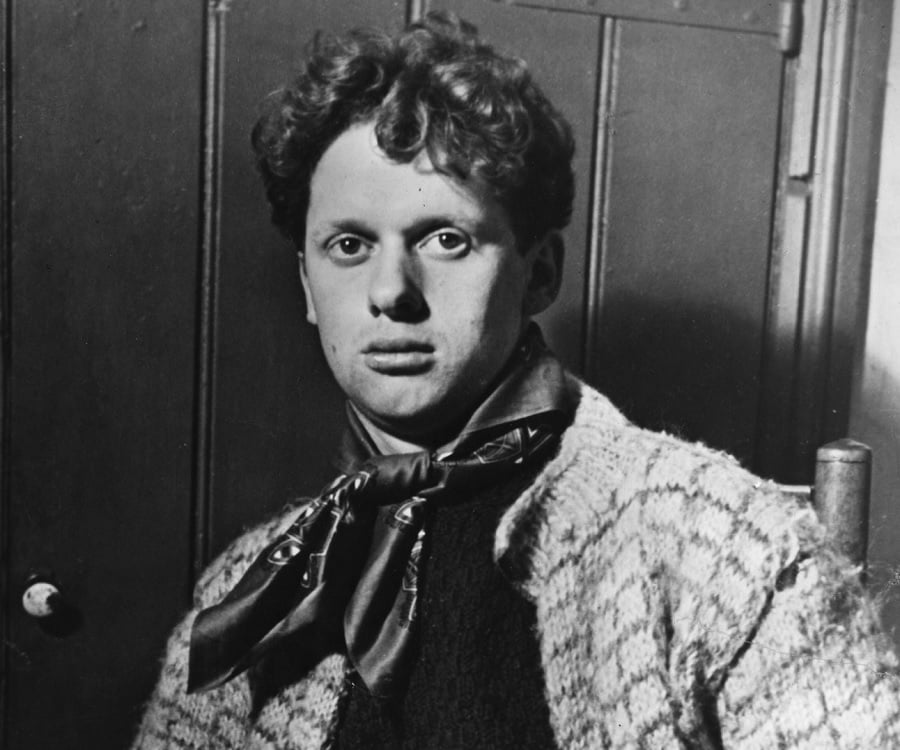
Do Not Go Gentle Into That Good Night
![]() |
| Dylan Marlais Thomas 1914 - 1953 |
Do Not Go Gentle Into That Good Night by Dylan Thomas
Do not go gentle into that good night,
Old age should burn and rave at close of day;
Rage, rage against the dying of the light.
Though wise men at their end know dark is right,
Because their words had forked no lightning they
Do not go gentle into that good night.
Good men, the last wave by, crying how bright
Their frail deeds might have danced in a green bay,
Rage, rage against the dying of the light.
Wild men who caught and sang the sun in flight,
And learn, too late, they grieved it on its way,
Do not go gentle into that good night.
Grave men, near death, who see with blinding sight
Blind eyes could blaze like meteors and be gay,
Rage, rage against the dying of the light.
And you, my father, there on that sad height,
Curse, bless, me now with your fierce tears, I pray.
Do not go gentle into that good night.
Rage, rage against the dying of the light.
Old age should burn and rave at close of day;
Rage, rage against the dying of the light.
Though wise men at their end know dark is right,
Because their words had forked no lightning they
Do not go gentle into that good night.
Good men, the last wave by, crying how bright
Their frail deeds might have danced in a green bay,
Rage, rage against the dying of the light.
Wild men who caught and sang the sun in flight,
And learn, too late, they grieved it on its way,
Do not go gentle into that good night.
Grave men, near death, who see with blinding sight
Blind eyes could blaze like meteors and be gay,
Rage, rage against the dying of the light.
And you, my father, there on that sad height,
Curse, bless, me now with your fierce tears, I pray.
Do not go gentle into that good night.
Rage, rage against the dying of the light.
The form of this poem is known as a vilanelle; a strict format with nineteen lines - five tercets (three lines) followed by a final quatrain of four lines. Notice that each stanza has the same ABA rhyming scheme.
The lines 'Do not go gentle into that good night' and 'Rage, rage against the dying of the light' have become iconic in their own right. The influence of this poem has become widespread since it's publication. It is an exhortation to resist the onset of death, written as his own father was dying. The poet gives the examples of how 'wise men', 'good men', 'wild men' and 'grave men' do not meekly accept the inevitable.
Television writers have borrowed deeply from the poem including Doctor Who, Northern Exposure, Mad Men and Family Guy. The poem's connotation with death and endings was used to effect in the final episodes of St. Elsewhere and Roseanne.
As well as taking his name from Dylan Thomas, Bob Dylan was hugely influenced by his writing style and developed Thomas's themes of conflict in his own lyric writing.
I'm listening to the Norwegian soprano, Sissel Kyrkjebø singing the spiritual song Going Home based on the largo (second movement) of Dvorzak's New World Symphony.
Listen here and be spellbound! I never tire of it.
I'm listening to the Norwegian soprano, Sissel Kyrkjebø singing the spiritual song Going Home based on the largo (second movement) of Dvorzak's New World Symphony.
Listen here and be spellbound! I never tire of it.
Tuesday, 30 April 2019
Strawberry Fields / Penny Lane
THIS IS A RE-POST FROM SEVEN YEARS AGO
In 1966 The Beach Boys released Pet Sounds, widely praised as one of the most influential and innovative popular recordings of all time. Meanwhile in England, The Beatles were entering the most creative period in an outstandingly productive career They listened to Pet Sounds and were inspired in the same way that Dylan had influenced them a few years earlier. They had decided to try to produce something in a similar vain and were sensationally successful as the result was Sergeant Pepper's Lonely Hearts Club Band.
They began by each of them returning to their roots and writing a song each about their up-bringing in Liverpool. John Lennon came up with Strawberry Fields and Paul McCartney composed Penny Lane; both titles being taken from locations in that city. Their UK record label, EMI, were pushing for a new single so they released a double A-sided disc using those two songs which never made it on to Sergeant Pepper after all.
![]() |
| Photo: Linda McCartney |
The songs are interesting because, for me, they epitomise the character and song-writing style of each of the two Beatles.
Penny Lane is strongly melodic and actually fairly complex musically. The lyrics are very interesting and must seem mysterious to non-British listeners. They contain several ambiguities
| The 'shelter in the middle of the roundabout' |
such as being "there beneath the blue suburban skies" while the fireman "rushes in from the pouring rain - very strange". Very strange indeed. So the images are being presented as a kaleidoscopic view of Liverpool. It is rumoured that McCartney was using LSD at that time....."She feels as if she's in a play. She is anyway"
"Four of fish and finger pie" is a very clever piece of writing and worth explaining. "Four of fish" referred to four pennies worth of Fish and Chips and "finger pie" is a sexual reference to the fumblings that went on the the bus shelter (solo or joint!). Also it's a lovely pun on 'fish fingers' which is how fish sticks are known in the UK.
One of the most interesting things about the recording is the piccolo trumpet solo played by the late David Mason of the London Symphony Orchestra. Paul heard a recording of Bach's Brandenburg Concertos and asked George Martin what the instrument was playing the high notes. It is an exceedingly difficult instrument to play because it does not keep properly in tune with itself! The player has to 'pitch' the notes him or herself. Very strange. Paul told David Mason exactly which notes he wanted to be played. Paul McCartney was a great inventor of melody and an original lyricist. Listen to it HERE.
By complete contrast Strawberry Fields Forever really represents the state of John Lennon's mind at that time and I am going to talk about this song from a psychological point of view. Strawberry Field is the site of a Salvation Army Children's Home in Liverpool near where Lennon grew up. Lyrically the song is very introspective with each verse descending deeper into a kind of mire of indecision:
"No one I think is in my tree, I mean it must be high or low.
That is you can't you know tune in but it's all right, that is I think it's not too bad."
and
"Always, no sometimes, think it's me, but you know I know when it's a dream.
I think I know I mean a 'Yes' but it's all wrong, that is I think I disagree."
One of the most interesting things about the recording is the piccolo trumpet solo played by the late David Mason of the London Symphony Orchestra. Paul heard a recording of Bach's Brandenburg Concertos and asked George Martin what the instrument was playing the high notes. It is an exceedingly difficult instrument to play because it does not keep properly in tune with itself! The player has to 'pitch' the notes him or herself. Very strange. Paul told David Mason exactly which notes he wanted to be played. Paul McCartney was a great inventor of melody and an original lyricist. Listen to it HERE.
By complete contrast Strawberry Fields Forever really represents the state of John Lennon's mind at that time and I am going to talk about this song from a psychological point of view. Strawberry Field is the site of a Salvation Army Children's Home in Liverpool near where Lennon grew up. Lyrically the song is very introspective with each verse descending deeper into a kind of mire of indecision:
"No one I think is in my tree, I mean it must be high or low.
That is you can't you know tune in but it's all right, that is I think it's not too bad."
and
"Always, no sometimes, think it's me, but you know I know when it's a dream.
I think I know I mean a 'Yes' but it's all wrong, that is I think I disagree."
| Strawberry Field, Liverpool |
But the most amazing thing about this record is the way that the very recording of the song reflects John Lennon's indecision. Did you know that the record is made from two completely different takes spliced together? If you listen carefully HERE at about the one minute point you can clearly hear the miraculous job that engineer Geoff Emmerick and producer George Martin have done. They had two recordings at different speeds and in different keys which they achieved by slightly slowing one down and speeding the other one up. This matched the speed and altered the pitch and it was all done with a pair of scissors and two tape machines!
Postscript: Brian Wilson of The Beach Boys was in the middle of producing their album Smile when he heard the Sergeant Pepper album being played on the radio in his car. He pulled up at the side of the road and listened to the whole of the record. He immediately stopped work on Smile and did not go back to it for decades. I wonder what he thought.
Also, years later, George Martin said that it was an awful mistake not including Strawberry Fields and Penny lane on the album because they were the foundation of the concept that generated it. However, the Beatles had a policy of not including single releases on albums.
Thursday, 18 April 2019
Painting of the Month (87) April 2019: Rembrandt Self-portraits
About ten percent of all of REMBRANDT VAN RIJN’s works were
self-portraits. He made around one hundred, of which about forty are paintings.
His earlier efforts were mainly etchings but later on the oil-paintings took
over. He produced self-portraits at a steady rate until his death in 1669 aged
63 and they form a sort of artistic autobiography and they give us an ever-changing
view of his appearance – warts and all. This is my favourite of his self
portraits; he generally did not paint in this rather grand way but instead
showed himself in everyday poses and using a variety of facial expressions
which was very unusual for that time.
I'm listening to Elvis Costello singing the marvellous song Shipbuilding, originally written for Robert Wyatt (whose version I actually prefer). Elvis improved the original lyrics in the light of the Falklands War. It includes the wonderful lines "Diving for dear life when we could be diving for pearls" - a poignant look at the choices people make. The song tells the story of men and boys being sent to war in the very ships that they had constructed. Listen here.
Wednesday, 27 March 2019
The Lavender Hill Mob
A couple of weeks ago Leah and I went with some friends to an event which was part of JEWISH HISTORY MONTH. It was a tour and talk at Ealing Studios. They showed one of the great Ealing Comedies – The Lavender Hill Mob with Alec Guinness, Stanley Holloway and also featuring Sid James, Alfie Bass and with a cameo from Sydney Tafler. The whole event was in honour of Sir Michael Balcon who directed the studio from 1938 to 1956. He was the son of Jewish immigrants from Latvia. Several members of his family were in the audience.
Sir Michael never really mixed with the ‘talent’. His office was a house within the Ealing lot and, if they wanted to talk with him, he opened a window and addressed them through it!
When the BBC took over Ealing Studios in 1956 he left the Company and set up Ealing Films in Borehamwood. Ealing is still a working film and television studio, the longest continually working one in the world, which opened under another name in 1902. The Berlin Film Studios would have held that record but they were interrupted by RAF Bomber Command during the war. The Luftwaffe’s attempt on Ealing was, thankfully, less successful!
I'm listening to Victoria de Los Angeles singing the haunting melody, usually known as 'Bailero' from Canteloube's Songs of The Auvergne. I listen to this piece of music nearly every day of my life and it never fails to move and inspire me.
Join me and listen here!
Friday, 22 March 2019
Painting of the Month (86) March 2019: L S Lowry
Laurence Stephen Lowry, always known professionally as L S Lowry, was born in Stretford, Lancashire, England in 1887. He was very much an eccentric Englishman and his works were late in being loved outside of the UK but he was always popular in England. His pictures were very accessible and for a long time he was viewed as ‘naive’ or a ‘Sunday painter’ which annoyed him intensely, but there is more depth to his personality and his work than that which first meets the eye. His paintings are instantly recognisable usually for the inclusion of so-called ‘matchstick’ men. Although he also painted some quite eerie industrial landscapes that are notable for having no people in them at all.
In some ways one could make an argument that Lowry was a bad artist but although he lacks some techniques he more than made up for it through keen observation, attention to detail and an obvious love of, and sympathy for, his subjects.
You will have to make up your own minds through looking at the pictures below!
L S Lowry (1887 - 1976), Going To The Match 1953
A very typical Lowry work and one of his best loved.
The Old House, Salford 1948
I love the simple, clean lines of this picture. It's a very simple painting but quite absorbing, showing Lowry's draughtsmanship.
Industrial Landscape 1955
Not actually devoid of people but they aren't prominent!
Portrait of a Man and his Two Sons 1950
This unusual painting was sold at Sotherby's for £1.7m in 2015
I'm listening to one of Don McLean's many beautiful but barely known early songs, Bronco Bill's Lament about the reality of Hollywood cowboy film stars. Listen HERE
Tuesday, 5 March 2019
Vin Mariani
VIN MARIANI was a tonic wine and
patent medicine which was made from Bordeaux wine and coca leaves created in
1863 by Angelo Mariani, a French chemist from Corsica. The ethanol in the wine
acted as a solvent which extracted the cocaine from the coca leaves thus altering
the drink’s effects. It was exported with 7.2mg of cocaine per fluid ounce to
compete with the higher cocaine content of similar drinks in the United States.
Advertisements for Vin Mariani claimed that it would restore health, strength,
energy and vitality.
Vin Mariani was a massive hit. Mariani’s wine
and coca tonic took his home city of Paris by storm, and then, the rest of
Europe and the U.S. Seizing on the opportunity, Mariani opened offices in
London, New York and Montreal. To support demand for his product in the U.S. he
opened a second laboratory in New York. Vin Mariani had many competitors and
imitators, but a shrewd celebrity-driven marketing campaign earned him millions of dollars worth of
sales. While Mariani’s ads claimed that thousands of doctors endorsed the
product, it was the celebrity endorsers who really pushed the elixir. The ads
he ran in newspapers and magazines featured countless politicians, actors,
writers and religious leaders, all extolling the many virtues of Vin Mariani.
Devotees of the drink included Alexander Dumas, Emile Zola, Presidents William
McKinley and Ulysses S. Grant, and countless monarchs including Queen Victoria
of England. In addition, actress Sarah Bernhardt and Pope Leo XIII, who gave
him a Gold Medal, were among the many who actually appeared in advertisements.
I think, considering the content’s, it’s no surprise that the product was so
popular!
Eventually these kind of drinks were banned which led to the invention of drinks like Coca Cola which originally contained some cocaine.
I'm listening to The Rolling Stones version of Jimmy Reed's Honest I Do from their first album. It's much-recorded song but I think their version stands up well to the others. Listen HERE.
Thursday, 28 February 2019
Sonnet 116 by William Shakespeare
Let me not to the marriage of true minds
Admit impediments. Love is not love
Which alters when it alteration finds,
Or bends with the remover to remove:
O, no! it is an ever-fixed mark,
That looks on tempests and is never shaken;
It is the star to every wandering bark,
Whose worth’s unknown, although his height be taken.
Love’s not Time’s fool, though rosy lips and cheeks
Within his bending sickle’s compass come;
Love alters not with his brief hours and weeks,
But bears it out even to the edge of doom.
If this be error, and upon me prov’d,
I never writ, nor no man ever lov’d.
This is in the form of an English or Shakespearean sonnet with three four-lined quatrains followed by a couplet. The other major form of sonnet is the Petrarchan which has an eight-line stanza followed by a six-line conclusion and with varying rhyme schemes.
The poet is describing how true love is never-changing and does not change "when it alteration finds". The metaphor of sailing the ocean is strong with "an ever-fixed mark that looks on tempests"; in other words the North Star. A "bark" or barque is a three-masted sailing ship.
In the third quatrain Time is personified but although his sickle may alter the course of beauty it cannot change love which lasts "even to the edge of doom" - until the end of life.
In the final couplet Shakespeare is saying if he is proved wrong in his description then no man ever-loved.
I'm listening to the wonderful and tragic Robert Wyatt singing with his group Matching Mole. The song, O'Caroline has real meaning in his life and is not just a love song. One day I will write a post about Wyatt. Listen HERE.
Thursday, 14 February 2019
Painting of the Month (85) Feb 2019: Samuel Peploe.
SAMUEL PEPLOE was a Scottish post-impressionist who worked in Edinburgh and Paris. He was an avid follower of the French painters throughout his career.
| Sill Life, Samuel Peploe (1871-1935)
I like this painting for its simple beauty and I am reluctant to
over-analyse. I will just say that the influence of Cezanne is strong and
obvious. That’s no bad thing as far as I am concerned! He made many still life paintings and also excelled at landscapes and a few portraits. Here's another:
I'm listening to my favourite version of one of my favourite songs: Willie Nelson's Funny How Time Slips Away. You can listen here. There's also a great version by Brook Benton and many others.
|
Wednesday, 23 January 2019
Happy Listening (1)
1) Madeleine Peyroux singing Careless Love
2) Bobby Charles singing Small Town Talk
3) Richard and Linda Thompson singing I Want to See the Bright Lights Tonight
4) Jake Thackray singing (live) Lah Di Dah
5) John Williams playing Antonio Lauro's Valse Creolo (aka Vals Criollo)
6) Wibert Harrison's original recording of Let's Stick Together
7) The cast of Hair singing What a Piece of Work is Man based on a speech in Hamlet
8) Steve Goodman singing The Dutchman
9) Kiki Dee singing Amoureuse
10) Jerry Jeff Walker's original recording of his song Mr Bojangles
Subscribe to:
Posts (Atom)